Latest News
Did you know? formaldehyde (HCHO) monitoring
In the context of increasingly stringent air quality regulations and growing awareness of indoor pollutants, formaldehyde (HCHO) monitoring has become a top priority. At CHROMATOTEC, we don’t just measure formaldehyde…
Did you know? New milestone for CHROMATOTEC
📣 Exciting News from Chromatotec®! 👏We are proud to announce that Chromatotec, in collaboration with our UK distributor We Care 4 Air, has been awarded a key contract for replacement…
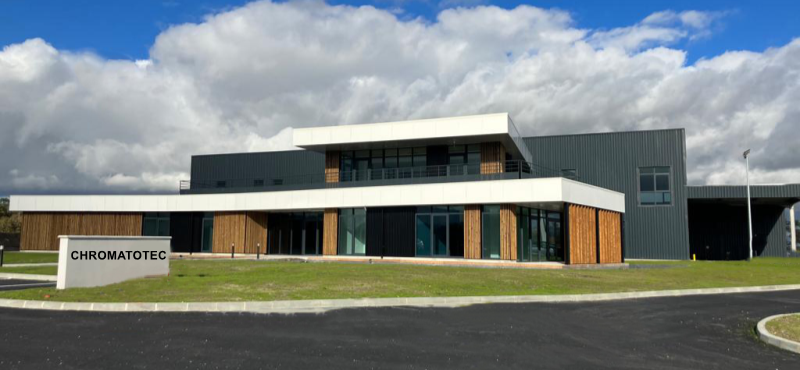
New Headquarters and Workshops for Chromatotec
Chromatotec is proud to announce that its new building, housing both the headquarters and workshops, is now operational! Production activities have commenced at this new site at the beginning of…
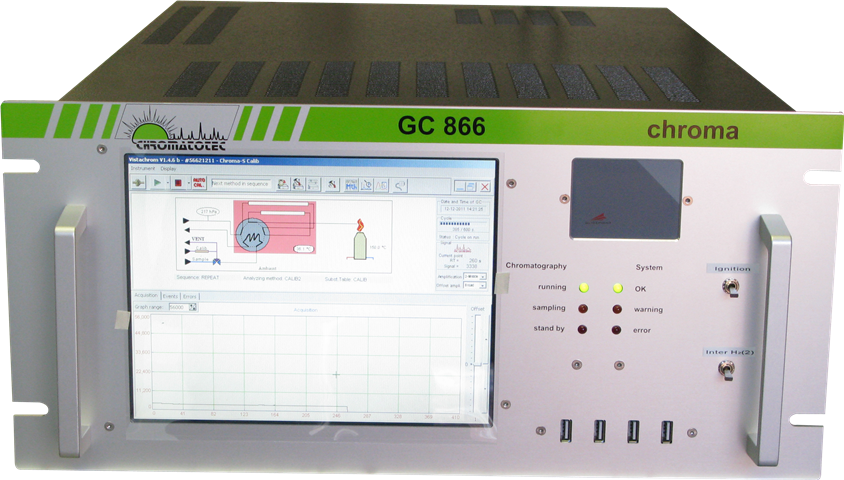
Did you know ? Continuous monitoring of natural gas and permanent gases
Permanent gas analysis covers a wide range of applications in the petrochemical, chemical, and energy industry fields. For example, permanent gases such as O2, CO2, N2, Ar, CH4 or ethane…
Chromatotec® group and SEDERE combine their expertise in liquid chromatography
Chromatotec®, French specialist in manufacturing turnkey solutions for gas and liquid analysis for 40 years, is proud to announce a collaboration with the company SEDERE, expert in the development, manufacturing…
Exhibitions, Conferences & Posters
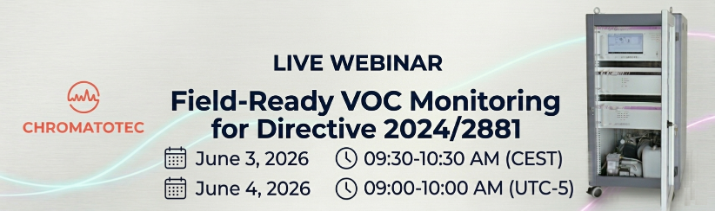
WEBINAR : Field-Ready VOC Monitoring for Directive 2024/2881
Why attend?With the adoption of Directive (EU) 2024/2881, monitoring ozone precursors has become a key requirement for local authorities, laboratories, and industrial operators. Reliable and continuous measurement of NMVOCs —…
A&WMA Annual Conference & Exhibition – Austin, TX – June 21-24, 2026
A&WMA ACE 2026 is recognized as a premier international conference dedicated to environmental science, policy, and technology. The event brings together environmental experts from industry, research, consulting, legal, and government…
AXELERA Technical Day – May 28, 2026, Solaize, France
On May 28, 2026, CHROMATOTEC will participate in the AXELERA Technical Day held at IFP Energies nouvelles in Solaize, France.During this event, Damien will deliver a presentation on the following…
WEBINAR : Advanced solutions for formaldehyde analysis
Join us for an exclusive free webinar hosted by CHROMATOTEC® and discover the latest innovations in specific formaldehyde analysis.Topics coveredParticipation is free butregistration is mandatorybefore April 1, 2026.
DELMAR Day 2026 — Salvador de Bahia, Brazil – April 16, 2026
More than just an event, DELMAR Day 2026 was a moment for exchange, learning, and innovation.Chromatotec®, together with our distributor in Brazil, Grupo DELMAR, welcomed customers, partners, and employees for…
Scientific publications

Ensuring compliance to present and future legislation of formaldehyde levels
EURAMET – European Metrology Programme for Innovation and Research
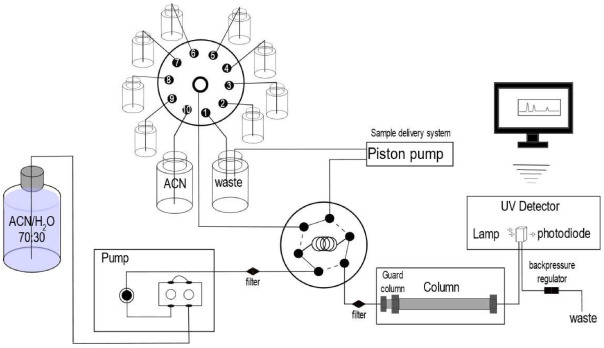
Development of a transportable High-Performance Liquid Chromatograph with Ultraviolet detection and a method for the rapid analysis of 13 carbonyl compounds hydrazones
Development of a transportable High-Performance Liquid Chromatograph with Ultraviolet detection and a method for the rapid analysis of 13 carbonyl compounds hydrazonesGrandjean, Audrey, Anaïs Becker, Mathilde Mascles, et al. « Development…
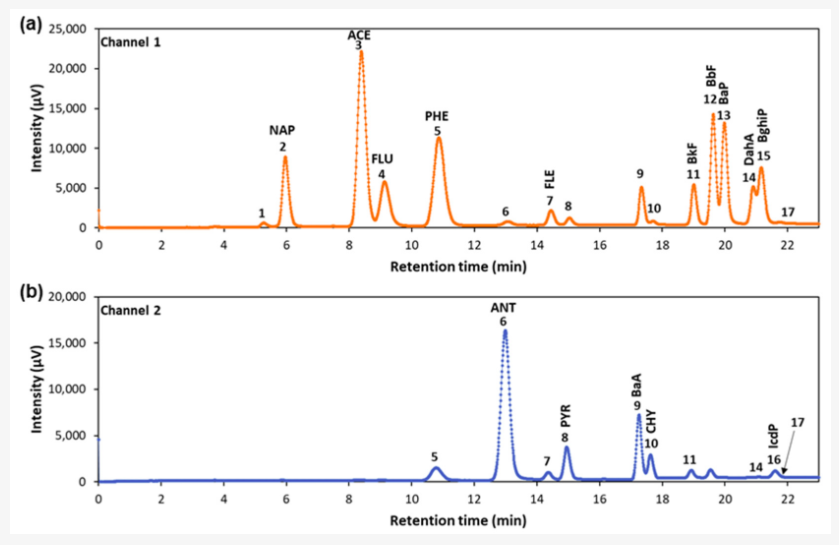
Development of an Online Instrument for Continuous Gaseous PAH Quantification: Laboratory Evaluation and Comparison with the Offline Reference UHPLC-Fluorescence Method
Vaz-Ramos Joana, Mathilde Mascles, Anaïs Becker, et al. « Development of an Online Instrument for Continuous Gaseous PAH Quantification: Laboratory Evaluation and Comparison with the Offline Reference UHPLC-Fluorescence Method ». Chemosensors 11,…
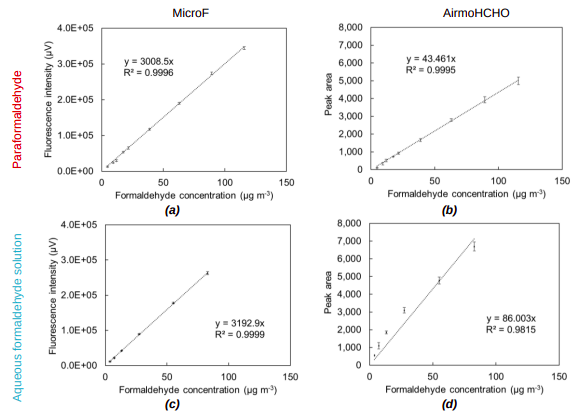
Comparison of Two Analytical Systems for Continuous Monitoring of Ppb to Ppm-Levels of Formaldehyde in Air
Grandjean Audrey, Damien Bazin, Franck Amiet, et Stéphane Le Calvé. « Comparison of Two Analytical Systems for Continuous Monitoring of Ppb to Ppm-Levels of Formaldehyde in Air ». Chemical Engineering Transactions 95…